Why Wild Thistle?

The thistle is my sigil. Not delicate, but deeply sacred.

It grows in hard soil. It blooms under duress. It protects itself with grace and thorn. Often it is underestimated, and yet, it thrives.

Wild Thistle is named for this bloom—the one that survives storms, sings its own kind of beauty, and refuses to be uprooted.

It stands for:

Protection — thorns that say: do not enter unless you come in truth
Resilience — blooming in harsh conditions, wind-swept and still radiant
Wisdom — long used in folk healing, often overlooked, yet deeply powerful
Ancestral Connection — a fiercely Scottish symbol, a bloom that outlasts empires

Wild Thistle is the wild place within—where I write from. It’s about the roots, the ritual, the remembering.

Sam and the Last Apple

Sam steps beneath the bare branches, breath rising in slow silver threads. He reaches up, fingers brushing the fruit’s smooth skin, then stops. A sparrow flickers nearby. Beyond the fence a crow answers, low and knowing.

The cider barrels are full. He doesn’t need this apple.

He remembers the years when grief hollowed him—a house closed tight, the orchard gone wild. How the trees, stubborn and alive, kept blooming anyway. How they lured him back with their quiet insistence: prune, gather, taste. Each season a whispered lesson that sorrow isn’t the end of the story.

Sam lowers his hand. The apple belongs to the air now. To the birds, the wind, the ancestors who wander between worlds when the veil thins.

“Some sweetness for the unseen,” he murmurs, almost a prayer.

He turns toward the house. Behind him, the last apple sways like a lantern, a small red heart beating against the gray.

The Lyrical Path

by Patricia Busbee

When I began creating Thistle Bay, I imagined it as a place, a house, a landscape, a threshold where story and magic could meet. But over time, I realized it wasn’t just a setting. It was a way of seeing, a lyrical path that threads through every story, spell, prayer, and journal page I’ve ever written.

For me, storytelling has always been more than craft. It’s how I listen to the invisible. How I transmute grief, or longing, or mystery into something whole.

Over the years, I’ve learned that lyrical writing isn’t ornamental, it’s about seeing differently. It’s about walking through the world with reverence, with attention, and with an open, untidy heart.

Thistle Bay will still live here, because it’s the novel I am writing and I love sharing my process and the lessons I’ve gathered from that world. But this blog will widen its circle.

Here, I’ll be exploring:

The art of lyrical writing — tools, reflections, and prompts
Creative practices for embodied living and perception
Updates from Thistle Bay, and glimpses into the houses that started it all (I have lived in 56 houses over the years and The Thistle Bay House is a composite of all of them.)

I want this space to become a kind of garden, part writing studio, part ashram, part kitchen table—where those who love story, myth, and mystery can gather and grow.

Thank you for walking with me through all my changing seasons.

The Gateway Between Mother & Crone

I can’t remember experiencing a more chaotic Samhain season. I entered it expecting stillness and reflection but found myself on a rollercoaster of family needs, losses, and surprises.

In an attempt to process the unpredictability of it all, I did what I always do when life feels too full, I opened my journal. It’s the most effective way I know to hear what’s really happening beneath the noise.

As I wrote, I tried to look at this month not as scattered pieces but as a whole story. Beneath the surface chaos, I found something I wasn’t expecting, a quiet recognition that something within me was changing.

As an adoptee, I have always viewed my spirituality as The Path of the Mother. Yes, I’m a witch, but for me, that has always meant devotion, healing, and care. My practice has been an ongoing act of mending—within myself, my family, and the world around me.

My house is full right now. My daughter returned home with my grandson while she rebuilds her life, and my eldest grandchild arrived on Tuesday for a visit. I welcome this with open arms, but it is a change. Our home has always, and will likely continue to be, a revolving door when it comes to family.

As I watched myself move in and out of the Mother role, I noticed something subtle yet undeniable. Alongside the Mother, another presence was standing. The Crone.

She’s not a stranger at my door. At sixty-seven, I’ve long known she was near. But I’ve always identified most strongly with the Mother because of how my life is structured. The Crone, however, doesn’t replace the Mother. She sits beside Her.

She doesn’t announce herself with thunder. She simply walks in, takes off her shawl, and says, “Let’s stop pretending we don’t already know.”

Her message to me was clear:
It’s time to rest your hands and raise your lantern.

The Mother gives life and keeps it moving. The Crone holds up the lantern and offers wisdom. She’s the one who knows when to stop pouring, when to watch instead of rescue, when to use her light to illuminate the path and whisper, “You’ve got this part.”

I’m not losing the Mother. I’m consciously sharing space with the Crone.

The Crone doesn’t discard my earlier selves. She gathers them. She carries the Maiden’s wonder, the Mother’s devotion, the wanderer’s grief, and she weaves them into clear-sighted compassion. She’s the one who can look at the whole pattern without flinching.

I realized I had experienced an internal re-balancing. My energy shifted from output to illumination. I’ve spent a lifetime feeding everyone else’s fires. The Crone arrived to teach me how to feed and tend others’ flames with breath, not fuel.

This is also a gift to my family, especially my daughters.
The Mother says, “Here, let me do this for you.”
The Crone says, “Here’s what I’ve learned. Try it your way, and I’ll hold the light.”

That shift creates space for them to rise, and for me to rest in wisdom rather than worry.

May we learn to guide without carrying, to illuminate without burning out and to know that wisdom can be as quiet as breathing.


Journal Prompts for the Gateway Between Mother & Crone

  • What am I avoiding seeing in myself?
  • What emotion or story keeps returning, asking to be witnessed?
  • What does the darkness want to give me, not take from me?
  • What in me is ending, even if I’m still pretending it isn’t?
  • Where in my life do I sense a doorway but haven’t yet stepped through?
  • If I could walk into a different version of myself tonight, what would she be carrying?

The Gateway Between Worlds

The Missing Altar

I’ve always had an elaborate ancestral altar in my home. I like to do it up proud—bells and whistles, teacups, bits of jewelry, and the poetry my mother wrote. It always gets extra attention around Samhain, and we’re almost at that threshold again.

Last Samhain, the photos and mementos were lined up on the kitchen table, waiting to be arranged. But due to unforeseen circumstances (I still don’t know what they were), the altar didn’t make it in our cross-country move. It exists somewhere between houses and miles, or who knows maybe it’s residing in some picturesque place on the other side. Thankfully, the photos and small sacred things survived the journey.

Yet absence, I’ve learned, is also an altar. It asks you to begin again.

The missing ancestral altar feels like one of those living metaphors the universe gifts us, a reminder that what we honor doesn’t vanish, it migrates, it shapeshifts, it makes room for something else.

Last year I wasn’t up to building another, but this year, with my daughter and grandson home, it feels right. I’m excited over gathering wood and paint and preparing the ancestors for their new dwelling. We’ll build again and fill the space with what remains and what’s been reborn, photographs, bits of jewelry, and the scent of cookies cooling on the counter. The ancestors will find it. They always do.

A Glimpse into my novel, Thistle Bay.


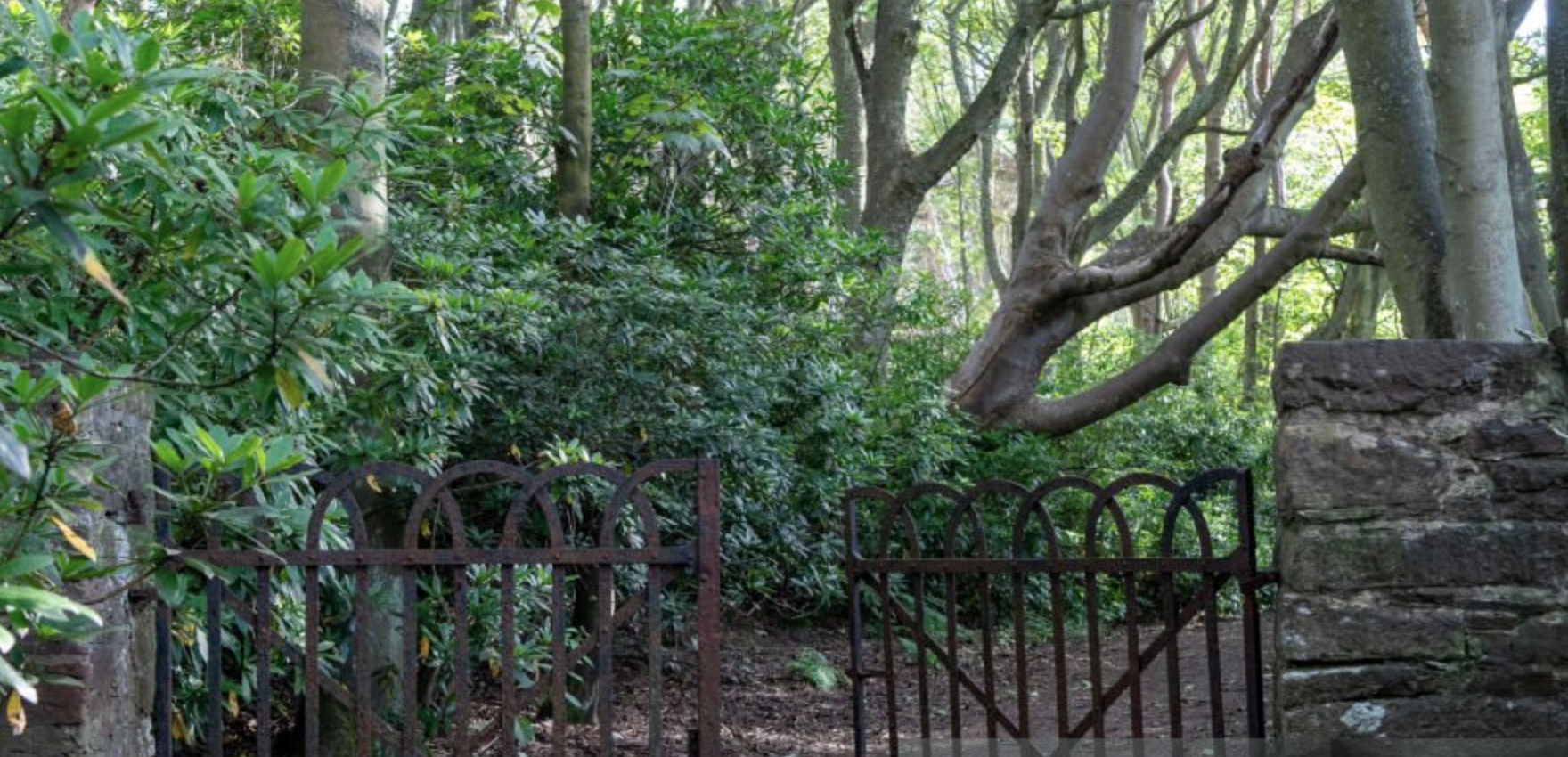
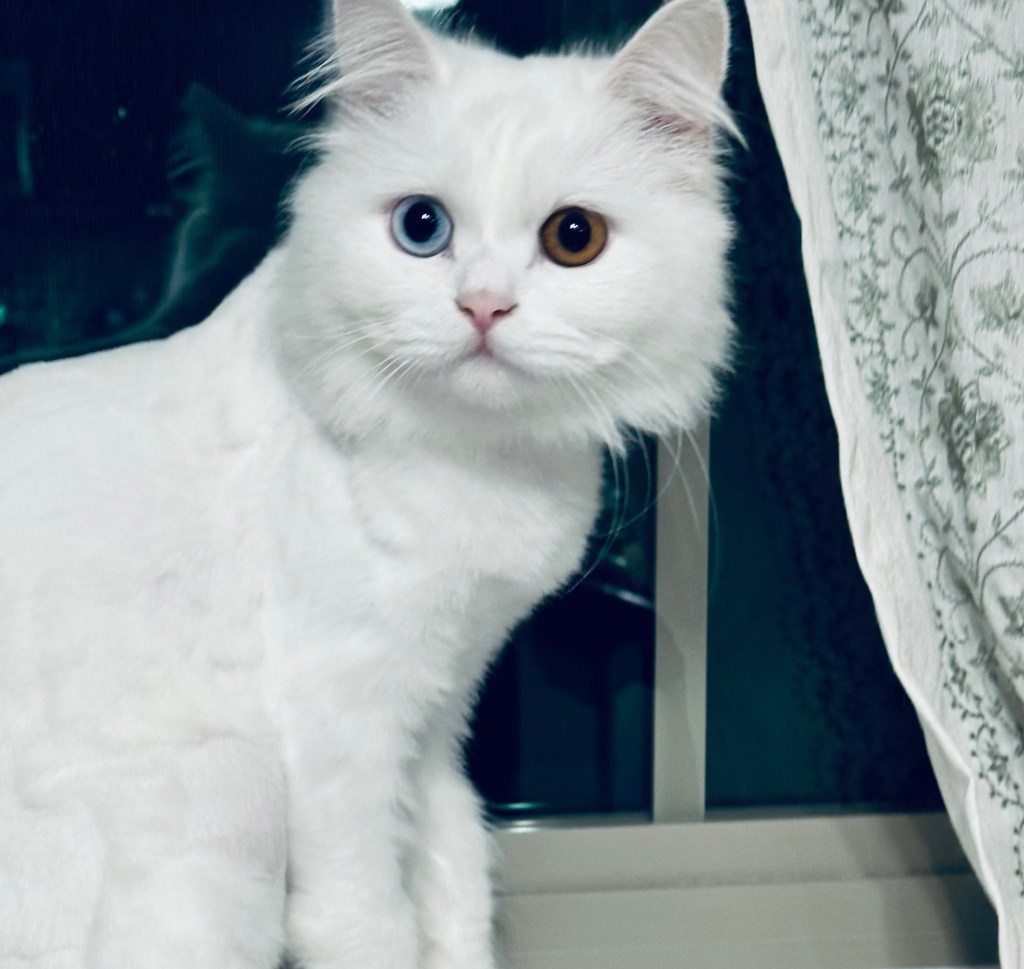
Meet Bones, the white-as-moonlight familiar who guards the garden gates of Thistle Bay and my own hearth alike.
He has one eye on the living & one on the departed.

The following isn’t a scene from the book, but it does offer a window into the world of Thistle Bay and its inhabitants.

Star watched as the fog unrolled itself over the yard, soft as unspun wool. The bells in the ash tree began their small dance, rising and falling like breath. She looked toward the orchard and nodded at the realization that it was almost Samhain again—the turning hinge of the year when the living and the dead lean toward one another and listen.

Bones, the year-old cat, white as moonlight, had appointed himself Keeper of the Threshold, Guardian of the Hearth. He is an unusual hybrid, one part Maine Coon, one part Persian, born in Russia, lived in Egypt for nine months, and somehow landed on First Street in Thistle Bay. His weathered passport, complete with shot records, was tied around his neck with a frayed ribbon when he appeared. He headed straight for the B&B and never left.

Bones arrived just a few days before Star, a quiet herald of her coming, though no one put two-and -two-together. When Wren spotted him on the property, she claimed him instantly. He has one blue eye and one amber. Wren insists the blue sees this world, while the amber gazes into the next. Though young, Bones carries himself like an old, salt-worn seafarer.

Each dawn he pads through the garden, his pom-pom tail flicking like a snow-covered branch as he makes slow rounds through the cat graveyard. He brushes against each cross as though waking old friends, then settles by the Brighid altar covered in stones, beach glass, rosemary sprigs for remembrance and a single votive trembling in its glass.

When the fog thickens, it’s hard to tell where the world ends and the veil begins.

Inside, Star bakes rosemary remembrance cookies for the ancestors. The scent threads through the open window and out into the mist, like an offering.

Folklore says rosemary keeps the memory of the dead close, its smoke calling them home gently. I like to imagine the fragrance finding Bones, and curling around him like an ancestral shawl.

Does anyone else keep an ancestral altar? What always finds its way onto yours?

Fox Doesn’t Care About Your Rules

The Second Moonlit Postcard From Thistle Bay.

I attend ritual with the best of intentions. Candles lined up, words rehearsed, prayers folded neatly like offerings. I want it to be perfect. But perfection often slips through my fingers. When the candles topple over and the prayers I’ve carefully written down are caught by the wind, I’ve learned this is where the real magic lives. 

I thought I would weave a recent experience of mine into Thistle Bay. The following isn’t a scene from my novel, but a window into the wider world of Thistle Bay. I’ll be sharing more glimpses like this, moments, characters and fragments that build the atmosphere of the place, even beyond the story on the page. Star is a main character in the book.

Star knelt at the cat cemetery, trying to focus on her whispered prayer. She wanted to get it right, say something solemn, anchor herself in the gravity of the moment. But just as the words settled in her throat, a russet blur darted past.

Fox trotted boldly between the crooked crosses, tail high, as if the cat cemetery were her personal stage. She stopped, scratched her ear with comic exaggeration, then glanced at Star with a look that was part dare, part joke. Wren snorted, trying to hide her laughter. 

The solemnity cracked. Star found herself laughing too, sharp and startled, until her eyes watered. It was ridiculous, and it was perfect. The dead didn’t need her polished words, they wanted her wild, unguarded presence.

The cemetery seemed to breathe with her, a chorus of unseen witnesses stirred by mirth. The dead had no hunger for polished prayers. They wanted her unguarded, alive, her wild laughter ringing through the dark like a spell stronger than any words.

The fox looked back, as if to say, nothing here will go the way you planned.

Wren shook her head, “Fox doesn’t care about your rules.”

When The Morning Comes For Me Like Hades.

It’s 5 am. Before the coffee even dreams of brewing, the cats stage a coup. One launches onto my chest, another yowls like a banshee at the bedroom door. My grandson, Taj, barrels down the hallway in full mythic flight. David calls for help with his pills. I unleash swear words like an unholy mantra. Instantly, I want to bite through my tongue. For the love of the Goddess, I haven’t even located my own name.

Some mornings aren’t just mornings, they’re underworld initiations. I think of Persephone, one minute gathering wildflowers, the next snatched into shadow. Queen of the in-between. She knows the shock of being claimed before you’re ready.

I just want fifteen quiet minutes, time to return from the dream world, a small dark cave of silence. Not an hour, not a spa day. Fifteen. And still, after forty-plus years of marriage, asking for it feels like blasphemy.

But here’s the secret gift of the underworld, it’s fertile. Writers know this rhythm. We wake with intentions and find ourselves kidnapped by life, cats, texts, grocery lists, the pomegranate seeds of distraction. Yet even in the dark, something germinates. Chaos becomes compost.

So I breathe the cool soil of Persephone’s realm, let the noise settle, and watch a sentence sprout. By 9:30 am with coffee and a strawberry smoothie in hand, I’ve turned this ambush into art.

The house softens. The cats curl. The coffee flows and I become the Queen of my own small underworld, carrying the hush of dreams into daylight.

Anyone else experiencing a rough start to the day?

Song of the Hearth

Lineage, Threshold, Heartbeat, Alchemy.

The following post is a bit more personal than my other posts. Flame-tending is on my mind as today is my day to kindle the fire and offer prayers and good energy to those within our order, Daughters of the Flame, and for anyone that requests it.

Across the globe, women have revived the ancient tradition of tending Brigid’s flame. In Kildare, Ireland, her fire once burned in the care of priestesses and later nuns, passed hand to hand across centuries. In our time, circles like Daughters of the Flame continue this practice, each woman tending for 24 hours before passing it on, with the 20th day entrusted to Brigid herself.

I’ve been tending since 1999, and in all the shifting seasons of my life, this has been the one constant. The flame I tend today was once lit from Kildare’s hearth, carrying Brighid’s breath across time. It is lineage, threshold, heartbeat, alchemy. It links me with those who came before and those yet to come, a communal heart that reminds me, nothing is lost, only transformed.

Each time I tend, I’m stepping into a lineage, Priestesses, Mothers, Rebels, Mystics, Poets, Artists, Outsiders, Catholics who see her as a Saint, and all who carried and carry fire in their own way, may you be acknowledged and embraced by Brighid’s wide circle.

Even if I tend alone, flame has an inherently communal quality. A campfire draws people near. A temple flame calls a village together. A candle vigil gathers grief and hope alike. Tending can be viewed as holding the “communal heart.”

Brighid’s flame is a thread, weaving our community into a tapestry of those who came before and those who will come after. Whoever tends is not just keeping the fire alive, they are the bridge of continuity.

Brighid’s Blessings to Everyone!

The Voice Beneath the Voice

When Silence Flattens a Character (and a Life)

I am finishing up my summer intensive fiction program, and I have thoroughly enjoyed this three-month journey. I have an MFA, but not in fiction. My work has mostly been memoir, nonfiction, and hybrid pieces.

I decided to jump genres and try something new—something I always wanted to do but didn’t. I was going down a certain path and didn’t want to muddy the waters. I wasn’t sure how to turn back, even though there was an underlying and not so silent current, trying to alert me I wasn’t where I wanted to be.

During my summer class I discovered how much I adore magical realism with its lyrical bend that draws out the poet in me. Creating scenes and characters and adding magical elements to everyday life has caused me to fall in love with writing all over again. I’ve added spells, recipes, ancestral ghosts that share wisdom, humor, and sometimes a bit of pot stirring.

I have given voice to all the aspects of myself, and I finally feel at home with my writing. I’ve found my voice, and my writing has taken a big leap. I think it’s because I am excited to learn.

My memoir was about healing my adoption issues. It was raw and necessary. It wasn’t time wasted, but I am grateful to be where I am now. For the first time, I feel in right relationship with my writing.

My novel is at the halfway point, and the pressure is on the main character to either shy away in despair or rise to the occasion.

This weekend I reread everything I’ve written so far, and I realized the main character had become paper-doll like. Flimsy. She had the outline of a person, but without the spark that makes her real.

It wasn’t the plot. It wasn’t the setting. It was her silence.

I hadn’t given her enough inner life on the page, her thoughts, her contradictions, the way she second-guesses herself before she dares to speak. Those elements were missing. So, I went back in, and instead of fussing over description or dialogue tags, I started weaving in the voice beneath her voice. The words she doesn’t say out loud but that still shape every choice she makes.

Thankfully, I was able to take her off life-support.

This process forced me to stop and think, what if our real lives worked that way too? Imagine if our internal dialogue, the loops of doubt, hope, memory, and secret joy were spoken aloud. Would we shock people with our honesty? Would we connect more deeply, or burn more bridges?

So often, the world hears our “edited” version. Polished, polite, or pared down to what feels safe. Meanwhile, our inner voices are weaving epics no one else ever hears.

I discovered how important it is to let those hidden voices out, at least on the page.

We live in two worlds, the inner and the outer. The one where we tell ourselves the truth, and the one where we offer the softened version. When those two worlds drift too far apart, things get brittle. And yet, when they line up too closely, we risk being raw and unguarded.

Is it possible that the healthiest thing isn’t to match them perfectly, but to let them remain in dialogue with each other?

Maybe the trick is not to silence that voice, but to give it room. In writing. In journaling. And sometimes in conversation, when we feel safe. I think it’s important to pause often and consider how our inner world aligns with our outer and adjust as needed.

Adding internal dialogue brought my character back to life. And maybe that’s the lesson, whenever we feel flat, whether in a draft or in ourselves, it’s often because we’ve lost touch with the voice inside. The one that stumbles, rambles, contradicts, questions, and dreams. The one that makes us whole.

Writing Prompt

Think of a moment when your “outer voice” said one thing, but your “inner voice” whispered another. Write a short scene capturing both.

Choose one of your characters and let them spill their inner dialogue onto the page without editing. How does this shift your sense of who they are?

  Reflect on your own life: when does your inner voice feel most aligned with the outer? When does it feel most at odds?

Everyday Alchemy: Turning Heaviness into Language.

Some days, the heaviness sits on me like an uninvited guest. The ordinary feels flat–groceries to carry, dishes to rinse, the same light slanting across the same coffee cup. It’s easy, in those moments, to sink into the weight of it.

But lately, I’ve been trying something different. Instead of letting the ordinary swallow me, I ask myself, how can I describe this? What is the texture of this grocery bag? What color is this light? If this heaviness were an object, what would it be?

And almost immediately, something shifts. The weight doesn’t vanish, but it changes shape. The ordinary reveals itself as alive. The language itself becomes a doorway.

This way of seeing requests that I slow down, be in the moment, and fully experience my surroundings, my internal thoughts, and how I am relating to them. It’s about learning to navigate between the internal and the external. This is a powerful practice because it can alter perspective both in your writing and within yourself.

This is the quiet magic of lyrical writing. It isn’t only about pretty sentences or clever metaphors. It’s about learning to see. To turn even the plainest moment into something illuminated, something that breathes.

Daily Noticing Prompts for Lyrical Language

When the world feels heavy or ordinary, try pausing for just a breath and asking one of these questions. Don’t worry about answering “well,” just notice what rises.

  • If this feeling were an object, what would it be?
    A stone in the pocket, a torn grocery bag, a candle burned low? Let the image carry the weight for you.
  • What color is the light right now?
    Harsh fluorescent, bruised violet, soft as milk? The light around you can name moods your heart hasn’t yet put into words.
  • What sound echoes how I feel?
    The hum of the refrigerator, the caw of a crow, the clatter of dishes in the sink. Even silence has its own music.
  • What gesture in my body mirrors this moment?
    A hand clenched tight, shoulders slumped, a foot tapping restlessly. Your body often tells the story first.
  • If this moment could speak a single word, what would it whisper?
    Storm. Home. Wait. Enough. Sometimes one word is more truthful than a whole paragraph.

Lyrical language isn’t just about what ends up on the page — it’s about how we choose to see. When we pause long enough to notice the way light slants across a coffee cup, or to imagine the heaviness in our chest as a stone, we give ourselves back a measure of wonder. The world doesn’t change, but our way of meeting it does. And from that shift, sentences are born — alive, breathing, carrying both beauty and truth.

May you find the poetry tucked inside the ordinary, may your noticing soften the heavy places, and may your words shine like lanterns in the dark.

Sensory Sorcery for Lyrical Writers.

Since I am writing a magical novel, I am using more lyrical language than usual in my prose. I am also a huge fan of poetry—both reading and writing. I love lyrical language. I am using it to world-build, create scenes, describe the landscape and the mood. I naturally have a bit of a lyrical bend to my work, but I wanted to push things a bit, so I created some basic exercises for myself. One of the exercises I am doing is the following:

Prompt: Describe a doorway 3 ways: enchanted, threatening, sacred. The key is to engage all the senses. The following is a brief example of my sacred door attempt. 

At the end of a narrow, cobblestone street, tucked between cracked buildings The relentless noise of the traffic, and laundry lines, there is a small ashram almost hidden, as if the city itself had forgotten it. The doorway is low and crooked. Faded pots hold murky water and pink lotus buds, guardians of the narrow steps. Someone has scattered rose petals and marigolds across the threshold. I pause at the entrance and take a deep breath, inhaling the scent of flowers and gasoline—an attempt at shaking off the city.

Sight Example: Teacups drying on a towel in the kitchen though no one has used them today.

Sound: The faint whoosh of wind down the chimney, carrying the scent of saltwater.

Smell: A faint perfume lingering in the hallway — not current, but like it’s soaked into the wallpaper.

Touch: Smooth banister worn satiny by decades of hands.

If anyone feels like sharing or discussing their writing process, I would love to hear from you. 

When the Oven Becomes an Altar

This hot Virginia morning, I stood barefoot in the kitchen, slicing sun-warmed peaches into a chipped bowl I’ve carried through fifty-two houses and a year-long trip to Egypt. It was my mother’s bowl. Not many things have remained—so much was shed over the years. But this pale-yellow bowl has stayed. It holds more than fruit. It holds nourishment, lineage, family, and the memory of gatherings long past.

Sometimes I whisper things into the mixing bowl. Nothing dramatic—just a line or two meant for the world. May children be safe. May truth rise. May we remember we belong to one another.  Lammas, the first harvest, is a perfect time to incorporate some Kitchen Witchery. It doesn’t ask for fancy words, only a strong heart’s desire. I love when stirring becomes spell work and the oven becomes an altar.

Food is never just food. It’s memory. It’s magic. And it brings people together. Food nourishes the soul as well as the body. When I pause and think of food in this sacred way, I recognize that this, too, is a soft form of resistance.

This morning my intentions stretched beyond Lammas and reached toward our shared future. 

May your table stretch wide. May your words root deep. And may the harvest, even in these strange times, remind us there is still sweetness.

Kitchen Magic Tip
When I cook, I stir clockwise and whisper:
May this nourish more than the body.
May it soften the edges.
May it carry my love and healing energy into whoever eats it.

Peach-Stained Prayers


Lammas (August 1st)

Lammas will soon arrive, August 1st. Now we begin the sacred work of noticing what’s ready. Not everything is ripe yet, but some dreams have plumped on the branch. In honoring the first cut, we bless the whole season to come.

The first harvest, the first of three cuts, is traditionally tied to grain, bread, and early fruits. (The second comes at Mabon, the Autumn Equinox; the final, at Samhain.) This is the moment of promise fulfilled, when what was sown in spring begins to show its fullness. We honor the labor of planting, tending, and believing.

Every summer, without fanfare or forethought, I find myself pulling off the road beside the little farm stand at the edge of town. The one with the crooked hand-painted sign and the cooler packed with Silver Queen corn—sweet as memory, and just as fleeting. I used to do this with my parents. There’s a kind of prayer in stopping for corn. In choosing what’s ripe. In saying thank you with your hands.

Now, I go alone or with my husband and still, it feels sacred. I run my fingers along the silk-tasseled ears, then pick out beefsteak tomatoes still warm from the sun. I’m not just purchasing produce. It’s a quiet ritual of remembering, of tending, a throughline between what was and what is. Lammas lives here too, in the hush between rows of beans and ripening watermelons. I can almost taste it swirling through the peaches.

Peaches carry a special memory. My mother taught me to make pie crust. An aunt, a kitchen witch in her own right,shared a secret that makes the crust extra flaky. The first pie I ever made on my own was peach. In a few days, I’ll make another one to honor my ancestors, and to honor the season and to remind myself of the golden sweetness still left in this world.

This Lammas, I will also be honoring the cyclical nature of life, death, and rebirth, as represented by Demeter and her daughter Persephone. Lakshmi, a deity that is dear to my heart, will have a place on my Lammas altar as well. She embodies abundance and the beauty of Mother Earth.

I feel strongly about focusing on the farmers who planted in spring, and the earth-tenders who now harvest our crops. In a time when deportation and division weigh heavy, I am especially mindful of the hands, often brown, often unseen, that feed this country. There is sacrifice in every basket of fruit. There is a prayer in every field. So, I’ll offer prayers for our soil and the people that tend it and for the elements that live within us and around us. I will offer prayers for the environment, for the weary and for the rising. May our world heal—on all levels. May Mother Earth be honored as the life-giver She is.

Lammas reminds us that the earth remembers and so do we.

Mini Ritual: A Lammas Blessing for Bounty & Gratitude

Offer something simple. Something real. A heartfelt prayer, a spoken blessing, or even just a pause under the sky.

Stand barefoot on the earth.
Light a gold or orange candle.
Say aloud the following or something else that stirs your soul: I give thanks for the fruit of my labor, for the sweetness of the season, and for the hands, seen and unseen, that have shaped this life.

Place a peach, a loaf of bread, or any offering you like on your altar or windowsill.
Then ask yourself:
What am I harvesting?
What am I ready to cut away?

Bless it all, the seen, the unseen, the sweet, the sharp and the unknown.\

Ink and Incantations.

There are books we love that seem to haunt us long after we’ve closed the covers. For me, those books have always lived in the strange and beautiful space I now call lyrical magical fiction, stories that blend the ordinary and the mystical in quiet, poetic ways.

Not fantasy.
Not sci-fi.
Not vampires or alternate planets.
Just this world but shimmering slightly.

A teacup that knows your secrets.
A tree that blooms when someone is healed, no matter the season.
A ghost that doesn’t apologize for showing up at breakfast.

I’ve loved stories like that my entire life. What I didn’t realize until very recently is, I also enjoy writing them. At 66, I’m finally giving myself permission to write the way I see the world. To trust that my own strange blend of poetry, intuition, spirituality, and myth has a place.

Lyrical magical fiction has offered me a creative home I didn’t even know I was longing for. I came to it sideways. When I began writing about my adoption, something unusual happened.
I imagined what my deceased biological mother might say to me, if she could. And her voice came through, clear, poignant, full of mystery. I didn’t know I was walking through the veil into the realm of the mystical. I only knew that the conversation felt true. And healing. And necessary.

That’s the thing about this kind of storytelling, it doesn’t ask you to explain the unexplainable. It just asks you to believe it for the span of a sentence. A page. A life. It lets me braid together all the parts of myself, my lifelong love of poetry, spiritual practices and devotional paths and the houses I’ve lived in, 52, and the ones that still live in me.

It affirms my experience as an adoptee, a seeker, a writer, an intuitive, and a woman who sees no boundary between the sacred and the everyday.

The teacup is an altar.
The garden is a prayer.
The page is a portal.

I’ve often said, I see the world through a witch’s eyes.
And honestly? I’m still stunned it took me this long to figure out my voice. I remember wanting to write fiction in undergrad but didn’t. It surfaced again in my MFA program at Goddard, whispering at the edges. But I told myself I needed to use my platform for more “important” things, to address oppression, grief, all the endless woes of the world. 

The truth is those themes can be woven into the fabric of my work if I choose. And I don’t have to suffer to write something meaningful. I still remind myself, it’s okay if I enjoy the writing process.

I’ve healed so much by writing about adoption, by facing it head-on. I no longer feel the need to circle it endlessly. That doesn’t mean it won’t show up in my fiction. It might.
But it will arrive in different forms, under different names.

I’m still deeply engaged in the world. I’ll always be that way. But I also trust now that wonder is as vital as witness.Beauty is not an escape it’s a kind of activism. Maybe I had to live enough years to understand how grief walks beside wonder. How the sacred hides in ordinary dust. How our stories aren’t always linear.

They spiral.
They haunt.
They heal.

But there’s more I need to say.

Last night, I woke from a dream that brought everything into focus.

I understood, in that soft, in-between place, why I write this way.
Why I string words together like spells.
Why mood and setting matter so much—because they are incantations.
A way of shaping how I see and feel and breathe.

I write like this because I’m trying to understand the world.

How to keep seeing beauty, even when everything feels broken.
How to hold grief and magic in the same palm.
How to live honestly in a world full of sorrow and still look for the shimmer.

Writing, for me, is both resistance and reverence.
A way to say, yes, this world is unraveling and yet,

There is still wonder.
There is still mystery.
There is still a ghost at the breakfast table, and a tree that blooms when someone forgives.

That’s what lyrical magical fiction offers me,
Not escape.
But a way to live with everything.
To bear witness and bless.

It challenges me.
It stretches me.
But more than anything, it heals me.

Are you drawn to stories like this too?
Have you ever written something you thought was “just a story,”
only to discover it held a spell, a prayer, or a sacred truth?

I’ll be sharing more about this journey in the coming weeks, craft notes, prompts, book recommendations, and lessons I’m learning as I write my novel.

But for now, I just want to say:

If you see the world a little differently,
If you talk to ghosts or believe that houses can feel,

You’re not alone.
You’re not wrong.
You might just be a writer of lyrical magical fiction.
Or maybe, like me, you always were.
How I Fell into Fiction (and Landed in a Haunted Orchard)

Wild Thistle is the wild place within—where I write from. It’s about the roots, the ritual, the remembering.

 I’ve been working on what I call a Lyrical Magical Fiction/Witchy novel for a stretch of time. It’s something I have wanted to do for decades. I was reluctant to give myself permission to switch genres and worked hard at keeping that part of myself silenced.  I was/am a memoir and non-fiction writer that sometimes wrote poetry. 

To my great surprise (and slight existential whiplash), I love creating characters and building witchy, enchanted worlds. It’s changed everything. I now write from the same intuitive space I enter when reading Tarot—a quiet place where I listen, wait, and follow the strange thread that shows up. With Tarot, I uncover the story inside the cards. With my novel, I uncover the story inside me.

My current work-in-progress is called Thistle Bay: Where the Cat Bones Sing. It’s got a magical house, a haunted orchard, and women who know their way around herbs, heartbreak, and hexes. Each morning, I show up curious to see what the characters are up to and whether they’ve gone and started a séance in the garden without telling me.

I’m enrolled in a summer long intensive fiction writing class and hope to have a strong 2nd draft completed by late August.

Switching genres has allowed me to braid together all the pieces of my life, writing, spirituality, witchcraft, intuition and spin them into story. It’s messy. It’s steeped in moonlight. And it feels like home.

This blog is my creative hearth. I’ll be sharing writing prompts, Tarot spreads, odd thoughts, character sketches, spell scraps, and whatever else tumbles out of my metaphorical cauldron. If you’re a writer, reader, a weaver, a seeker, or simply witch-curious, Welcome. I’m glad you found your way here.

I’d love to create community for myself and anyone that would like to hop on board. I’m imagining a Creative Coven of Writers and Readers.

Let’s see what unfolds.

Writing Prompt:
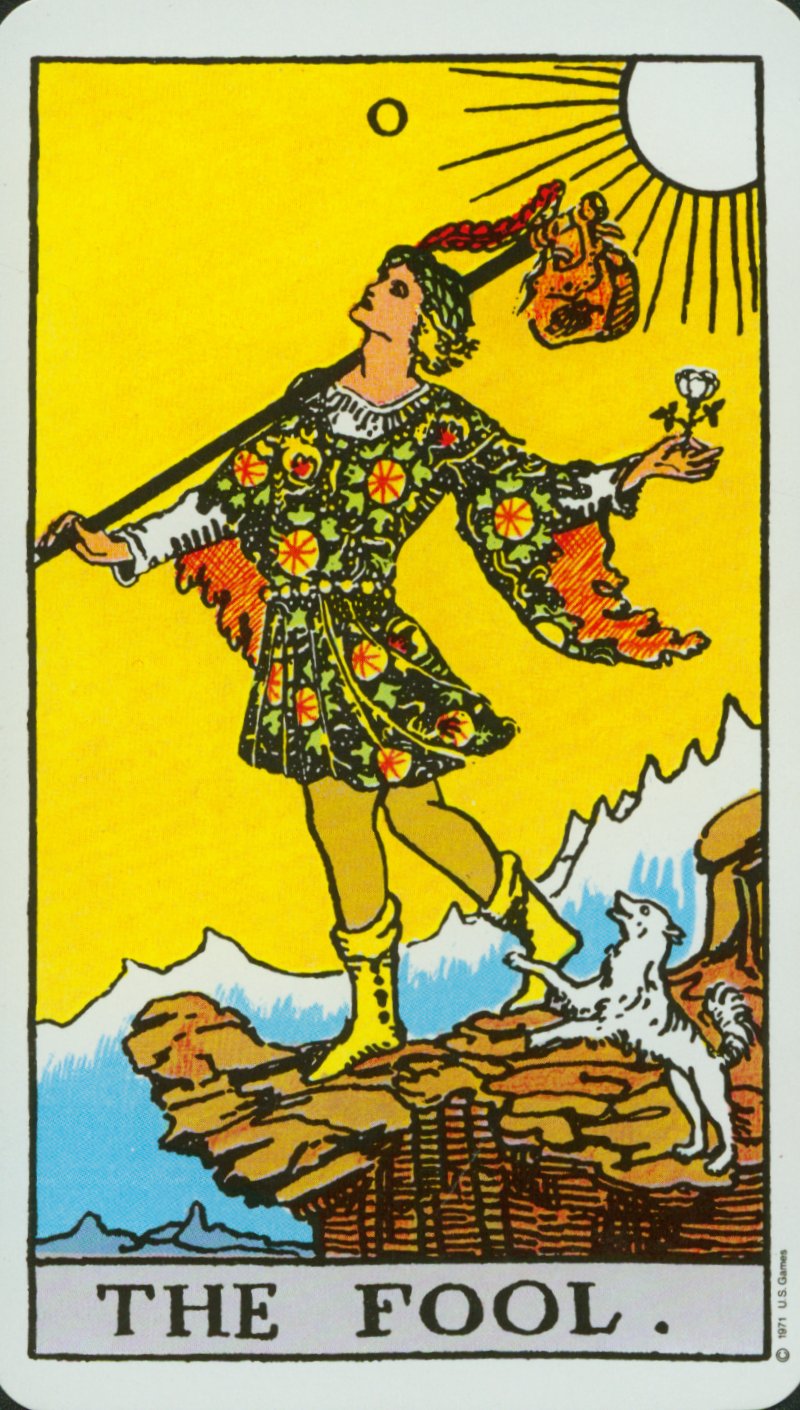
The Fool Tarot Card
What happens when someone hesitates at the edge of a cliff they thought they were ready to leap from? Write a scene, a memory, or a monologue from the moment just before the leap or the moment they turn back and realize the cliff wasn’t what it seemed. Remember, the Fool is the number 0, and contains all possibilities. Feel free to share what you’ve written. I’d love to read it.